
How do schools choose VR content that fits their curriculum?
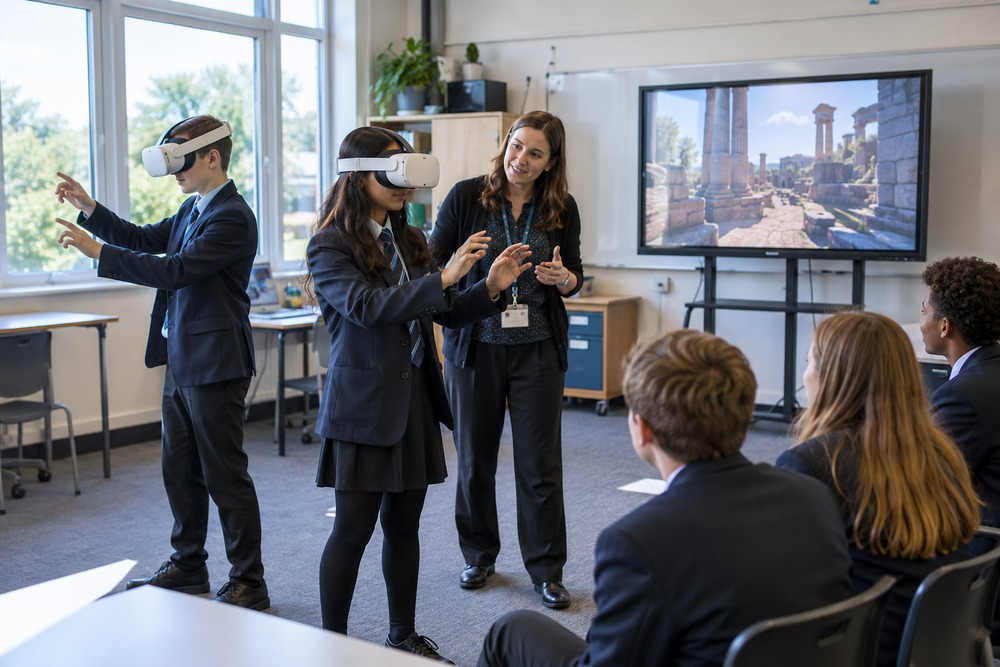
Useful educational VR content needs a stronger connection to the curriculum than an interesting setting. Start with what pupils are expected to learn, then ask whether the experience helps them observe, investigate or practise that particular idea.
How realistic does a VR training environment need to be?

High fidelity VR describes an experience with a detailed or closely matched representation of the intended setting. For training, realism should serve the learning objective. A visually impressive environment is not automatically a useful exercise, and a simple scene may be enough when the task is to recognise a layout or discuss a decision.
How is voice acting different when a character speaks directly to the viewer?
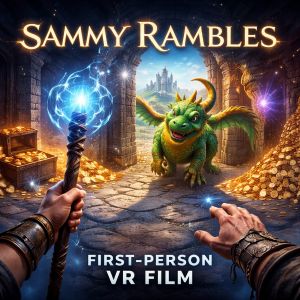
When a character speaks directly to the viewer, the performance needs to fit the audience’s position within the story. In Sammy Rambles and the Floating Circus, the first-person viewpoint places viewers behind Sammy’s eyes. Dialogue becomes part of an encounter rather than only an exchange watched from outside.
What should a school include in its first VR workshop?
A first school VR workshop should have one clear learning purpose and a manageable plan for every pupil. The headset experience is only part of the session. Preparation, supervision and classroom discussion determine how it connects to the lesson.
Can VR help managers practise allocating work during a busy shift?

A busy-shift exercise can help a manager practise allocating work when several demands arrive together. VR adds a shared scenario for discussion; it should reflect the responsibilities, staffing and escalation arrangements of the real workplace.
Can we use AR to compare different product configurations?
AR can be developed to show agreed product configurations, provided the digital assets and application support those options. High5VR can discuss how customers would select and compare them. Begin with the decisions your audience needs help understanding.
What should we include in a trainer’s guide for a VR exercise?

A trainer’s guide should explain how to run the learning activity around a VR exercise. It needs to cover the purpose, preparation, observation and discussion, as well as the basic equipment steps. A guide is most useful when another facilitator can use it without relying on the original developer.
How do we update one section of a training film without filming everything again?

It may be possible to update one section of a training film while retaining the rest. That depends on how the original material was made, which files are available and how widely the change affects the lesson. A small process change should first be reviewed against the whole film.
Can people watch our 360° film without a VR headset?

Yes, a 360° film can be prepared for compatible screen-based players as well as a headset experience. On a screen, viewers may be able to move the viewpoint using the supported controls. The exact options depend on the platform and how the content is delivered.
What is the difference between an AutoVR360 virtual test drive and driving the real car?

AutoVR360’s virtual driving experience and a real test drive serve different purposes. A virtual activity can introduce the experience and start a conversation, while driving an actual vehicle lets a customer assess that particular car in real conditions.