What equipment do hotels and restaurants need for VR staff training?
A hospitality VR training setup starts with the exercise you want staff to practise. A guest complaint, a reception handover and a kitchen hazard exercise may need different content and controls. Choose the equipment after agreeing the task, rather than buying several headsets and then trying to find a use for them.
Can VR training send learner results to an LMS using xAPI?

VR training can be designed to send agreed learning records using xAPI, but an LMS connection is not automatic. The VR application, receiving systems and reporting requirements must be assessed together. This article focuses on the records you want to receive, rather than treating every LMS as compatible.
What is passthrough on a VR headset, and when is it useful for training?

Passthrough lets a compatible headset display a camera view of the surrounding physical space. A mixed reality application can combine that view with digital elements. For training, the useful question is whether seeing the room or selected physical objects helps the learner complete a particular exercise.
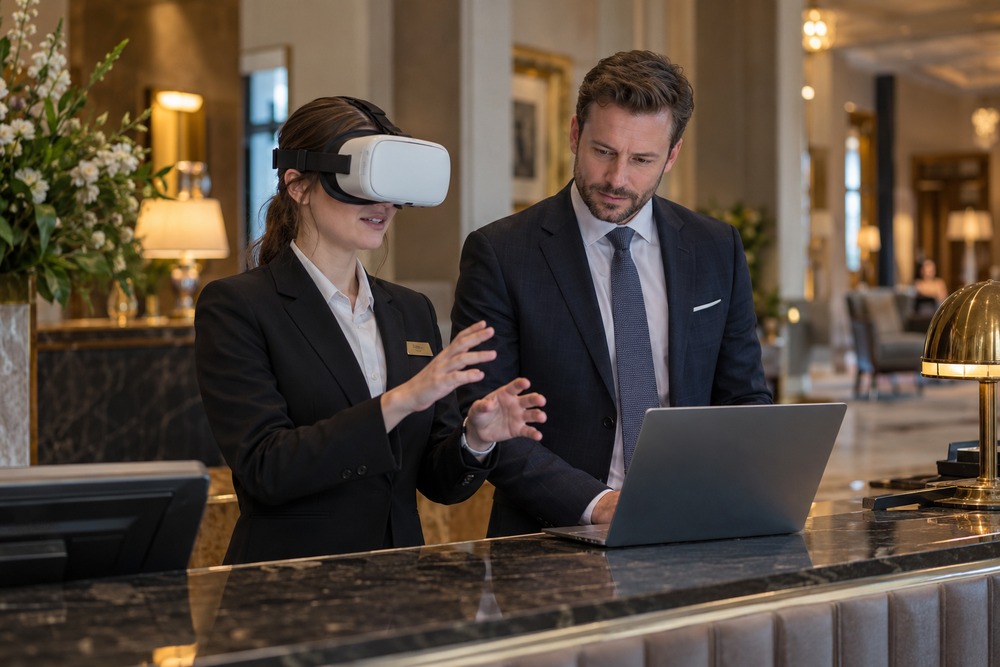
Can VR help hotel reception staff practise guest complaints?
VR can add a repeatable guest complaint scenario to reception training. A learner can practise listening, asking questions and choosing an appropriate next step before discussing the conversation with a trainer. The scenario should reflect the hotel’s service standards and escalation procedures.
Can VR add training for lone workers who rarely meet their trainer?
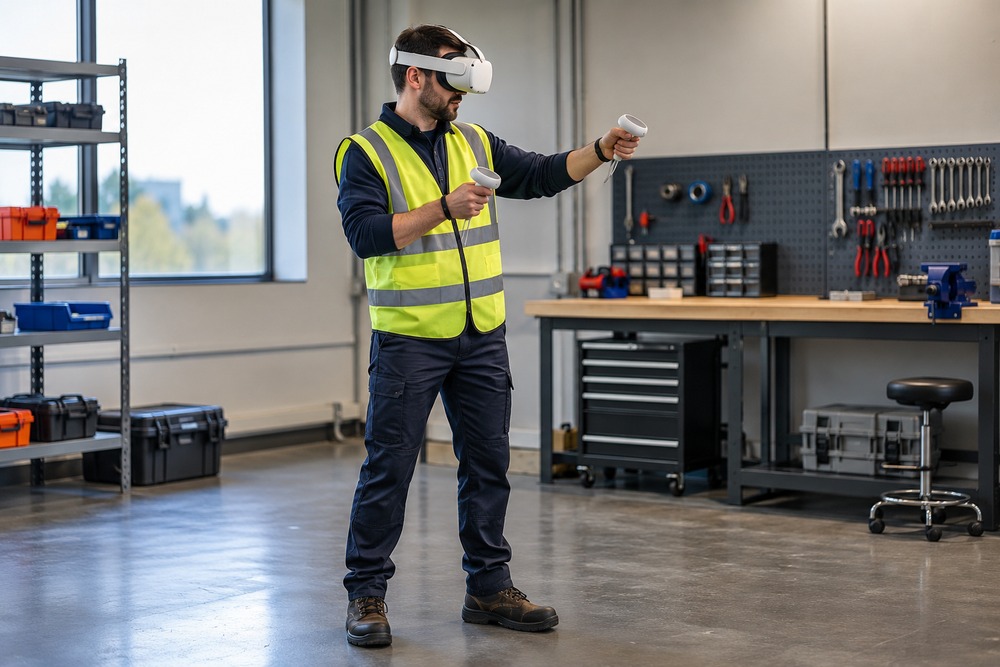
VR can add a structured practice exercise for staff who work away from a central training venue. It can give a trainer and learner a shared scenario to discuss, even when they do not meet often. The delivery plan must still account for support, supervision and the working environment.
How do we film workplace training without showing confidential or customer information?

A workplace training film can demonstrate a process without revealing real customer records or commercially sensitive information. The best approach is to prepare the location and demonstration materials before filming. Relying on blur alone can create avoidable editing work and make the lesson harder to follow.
Can a VR training programme grow one module at a time?

A bespoke VR programme can be planned in stages, beginning with one useful module and adding others later. This can help an organisation test the learning approach before committing to a larger content library. The first phase still needs a defined scope and a clear plan for how later material would fit.
Can we make a short training film from an existing staff presentation?

An existing staff presentation can be a useful starting point for a training film. It contains the knowledge you want to share, but the slides usually need to be reshaped into a clear viewing experience. The first step is to identify what the viewer should understand or do afterwards.
How is an interactive VR safety training module created?
An interactive VR safety module begins with an approved learning task. The development process turns that task into a scene where the learner can observe, choose or act, then receive appropriate feedback. Visual production and programming need to follow the training purpose.
What skills should you look for in a VR training development team?
A VR training project needs more than impressive graphics. The team must understand how to turn an approved learning objective into an experience that staff can use and trainers can review. The skills required vary with the content, hardware and reporting scope.
Can we add clickable hotspots and choices to a 360° video?
Interactive 360 video combines a recorded view of a real setting with actions provided by a suitable player or application. Viewers might select a point of interest, open approved information or choose which scene to visit next. Looking around a film and interacting with its content are different capabilities, so the intended behaviour needs to be part of the production brief.
How do we choose the right length for a business video?

The right length depends on the message, audience and where the video will be watched. A quick introduction and a detailed explanation have different purposes. High5VR can help define a focused structure instead of choosing a duration before the content is clear.
Can you film a VR documentary at our location?
Yes, High5VR can discuss location filming for an immersive documentary. The first step is to understand the story, access and final viewing experience. A location needs to provide useful context for the audience rather than simply offer an interesting camera position.
How do you plan a 360° shoot around museum exhibits?
A museum shoot begins with the institution’s access arrangements and the stories the film should convey. High5VR can work with your team to identify useful viewpoints around exhibits. Camera placement needs to support the audience’s understanding while respecting agreed collection and venue requirements.