
Quick answer: in a VR film, sound tells viewers what is happening around them, including behind them, and helps guide where they look. Dialogue, environmental sounds and music all work together. Spatial audio makes sounds seem to come from the right direction as the viewer turns their head. A good sound plan supports the story rather than having every sound compete for attention.
Why sound matters more in VR
In a normal film, the director controls what the viewer sees. In VR, viewers can look anywhere and may miss the main action. Sound is one of the most natural ways to draw their attention. A voice from the left, footsteps behind or a door creaking can make people turn.
The layers of sound
- Dialogue: what characters say, and where they are when they say it.
- Environmental sound: the background that makes a place feel real, such as wind, birds or a busy street.
- Sound effects: specific sounds that signal events.
- Music: setting mood and emotion.
Spatial audio
Spatial audio changes as the viewer turns their head, so a sound on the left stays on the left. This makes the scene feel real and helps viewers locate the action. It needs to be planned in recording and editing.
How dialogue fits the viewpoint
Consider who is speaking, where they are and whether they talk directly to the viewer. In a first-person film, characters may address the viewer as if they are the main character.
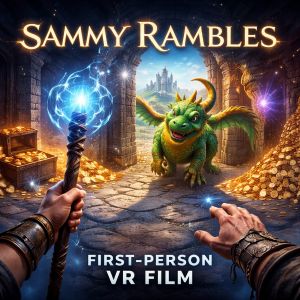
Sammy Rambles and the Floating Circus is being created from Sammy’s first-person viewpoint, so dialogue addressed to Sammy becomes part of the audience’s own experience. Timing and clarity need reviewing alongside the animation.
Do not overload the scene
If many sounds compete at once, viewers may not know where to look, and important dialogue can be lost. Balance the mix so the most important sound is clear, with other sounds supporting it.
What should be tested?
- Is important dialogue clear and understandable?
- Do sound cues lead viewers to the right place?
- Does spatial audio work on the intended headset or player?
- Is the volume balanced throughout?
- Does the sound match what viewers see?
Plan sound in the scope
Recording, editing and the spatial audio approach need to be part of the production scope. High5VR can discuss how sound and picture will work together for your story. Find out more about Sammy Rambles.
Frequently asked questions
Do viewers need headphones?
Headphones give the best spatial audio experience.
Can spatial audio be added later?
Some can be created in editing, but planning during recording gives better results.
Is music important in VR?
Yes, but it should support the scene without drowning out dialogue.
What if a viewer misses a line?
Repeating key information helps make sure the story stays clear.
Contact High5VR to discuss your audience, objective and project scope.