Useful educational VR content needs a stronger connection to the curriculum than an interesting setting. Start with what pupils are expected to learn, then ask whether the experience helps them observe, investigate or practise that particular idea.
Map the experience to the lesson
Identify the knowledge or skill being taught and the evidence pupils should produce afterwards. Review the whole experience, not just a promotional clip. Check that the explanation, terminology and level of detail match the class.
Check what the teacher can control
Consider whether the activity can be paused, repeated or presented in a suitable sequence. Establish what pupils can interact with and what is simply part of the scenery. Accurate surroundings do not automatically provide an accurate explanation of the subject.
Evaluate suitability and practical access
Review age requirements, accessibility, accounts, licensing and any data collection through the school’s normal processes. Test the content on the intended devices. Include a way for pupils to achieve the lesson objective without wearing a headset.
Discuss your project with High5VR
For a bespoke project, bring High5VR the curriculum objective and teacher-approved source material. The production can then be shaped around the lesson rather than expecting a lesson to fit an unrelated virtual environment.
Contact High5VR to discuss your audience, objectives and scope.
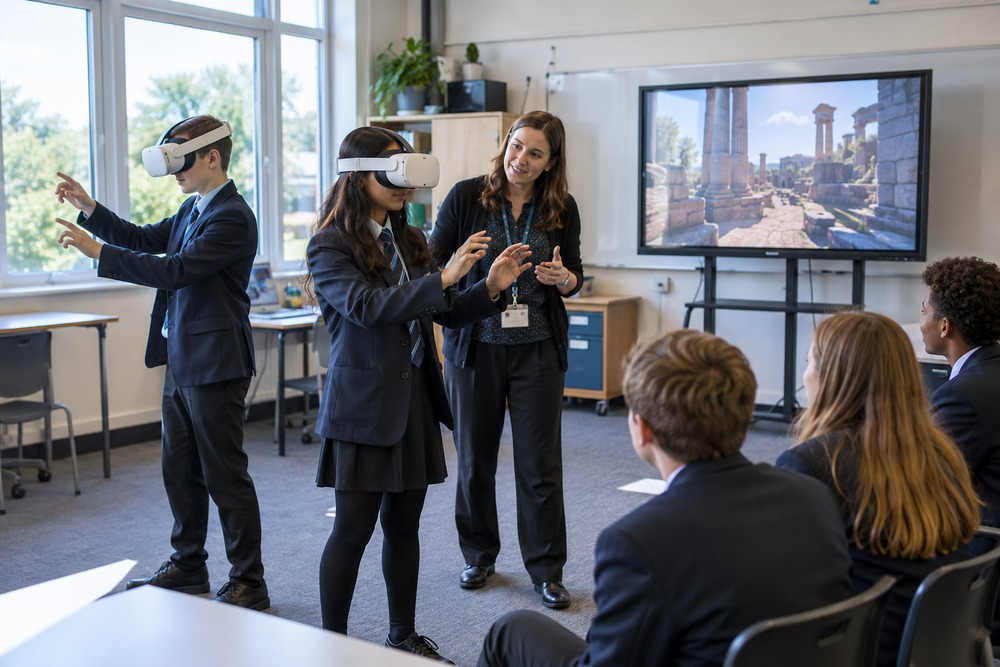
Featured image: illustrative image.