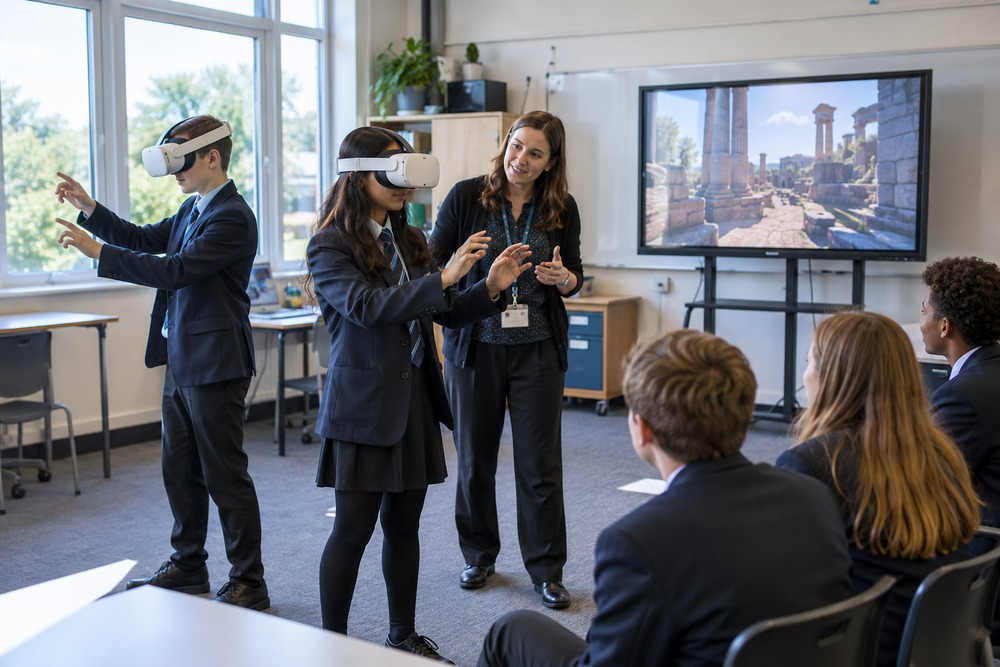
A first school VR workshop should have one clear learning purpose and a manageable plan for every pupil. The headset experience is only part of the session. Preparation, supervision and classroom discussion determine how it connects to the lesson.
Choose a focused learning outcome
Select content that helps pupils explore a specific question. Check it in full before the workshop, including the language, visual content and interactions. Confirm the device and application age requirements rather than assuming any educational label makes an experience suitable.
Plan participation and support
Decide who supervises headset users and what the rest of the class does. Allow space, fitting time and equipment reset. Provide a meaningful alternative for pupils who cannot or do not wish to wear a headset, following school procedures and manufacturer guidance.
Finish with a classroom activity
Ask pupils to describe what they observed, compare evidence or explain a decision. The follow-up should connect directly to the planned lesson. A brief pilot with staff can reveal unclear instructions and practical problems before the whole class takes part.
Discuss your project with High5VR
High5VR can discuss a school workshop concept or bespoke learning content. Start with the age group, curriculum objective, group size and available space so the proposed activity fits the teaching plan.
Contact High5VR to discuss your audience, objectives and scope.
Featured image: illustrative image.