
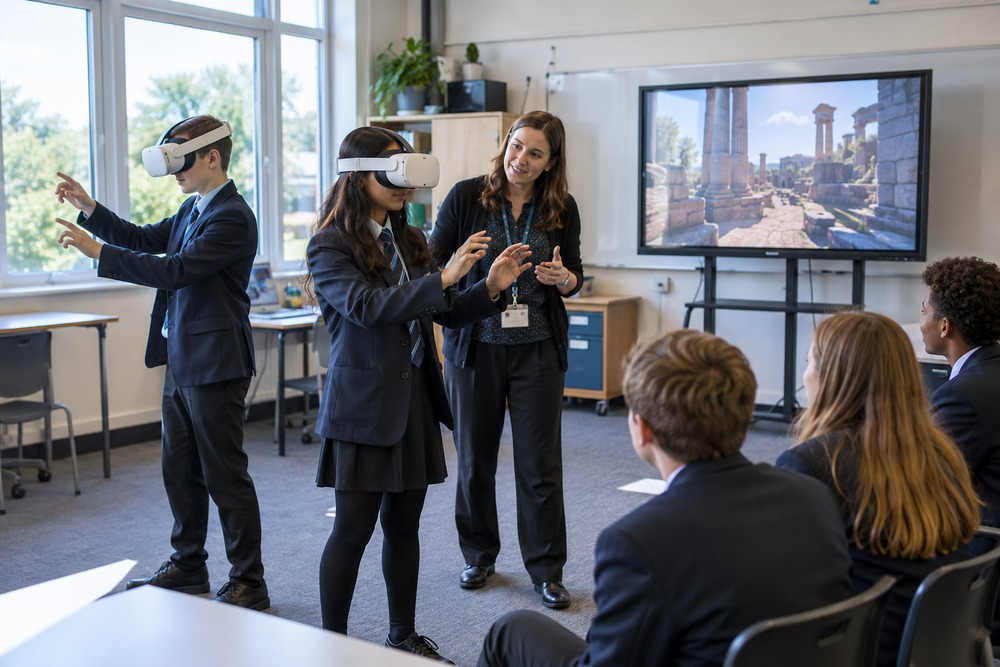
A VR experience works best in a lesson when pupils know what they are looking for and use their observations afterwards. The connection can be simple: a question before the experience, a focused observation task and a classroom activity that draws on the result.
Introduce the question before the headset
Give pupils enough background to interpret the scene. Ask them to look for evidence, compare two features or consider a particular choice. A long checklist can overwhelm a short experience, so prioritise what matters to the lesson.
Make observations easy to capture
Pupils might talk through what they noticed immediately afterwards or add notes to a shared worksheet. Do not assume they can write while using a headset. Plan how those using an alternative format will contribute equivalent observations.
Use the evidence in the follow-up
Ask the class to explain, challenge or apply what they observed. Compare the experience with another source where appropriate. Distinguish what the virtual environment actually showed from what pupils inferred, especially when discussing a simplified model.
Discuss your project with High5VR
High5VR can work from a teacher’s lesson objective to shape an immersive scene. Worksheets, narrated introductions and follow-up material should be specified if they are required as part of the production.
Contact High5VR to discuss your audience, objectives and scope.
Featured image: illustrative image.