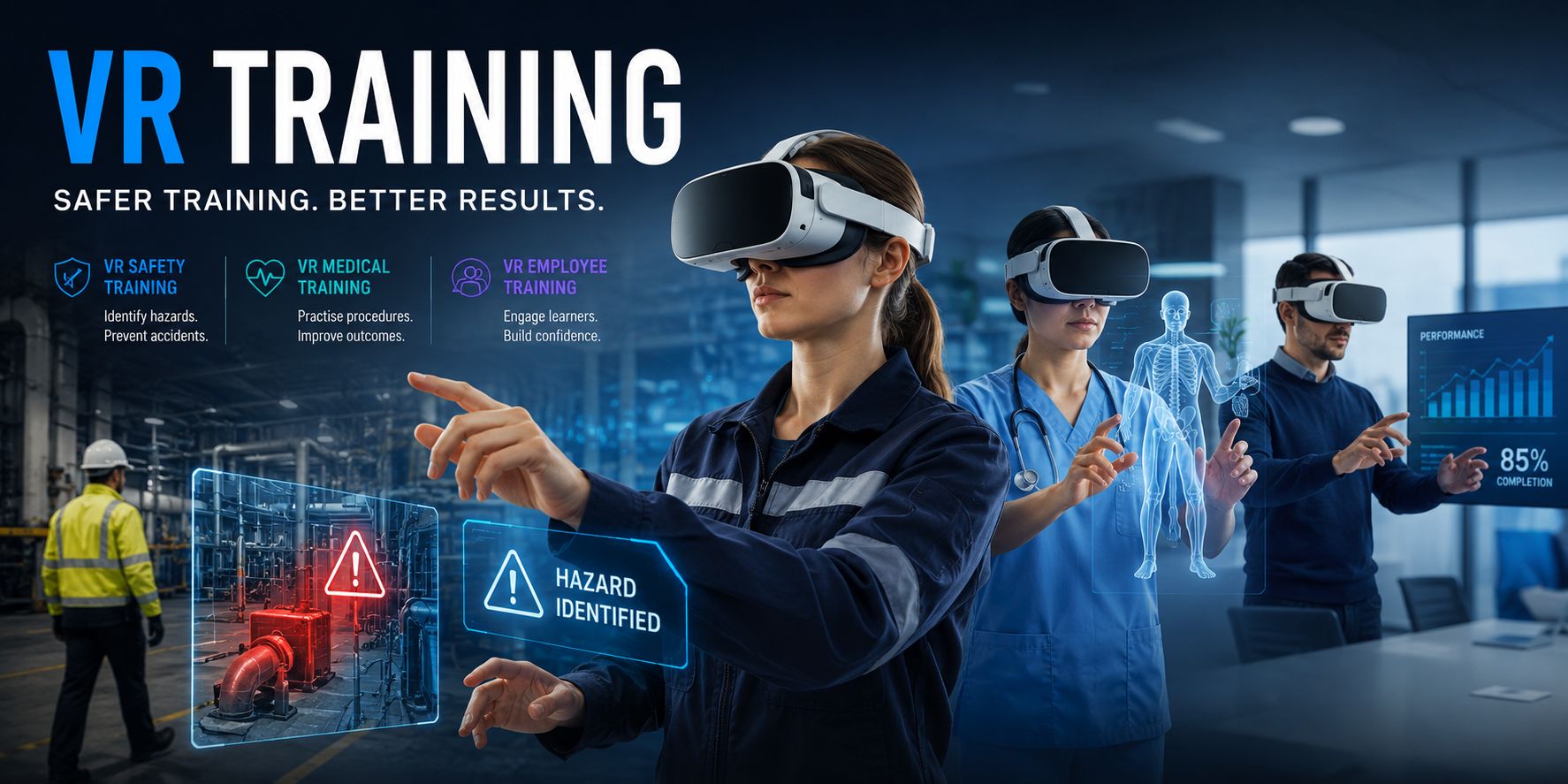
Across the UK and around the world, organisations are adopting Virtual Reality (VR) training to improve safety, increase employee confidence, and deliver more effective learning experiences.
With VR training, staff can safely practise real-world scenarios, identify hazards, and build confidence without any real-world risk.
Research by PwC found that VR learners:
- Learned 4 times faster than classroom learners
- Were 275% more confident applying their skills
- Were 1.5 times more focused than traditional learners
When training feels real, people learn better.
From healthcare and construction to manufacturing and emergency services, VR training is helping organisations reduce risk while improving performance.
10 Frequently Asked Questions About VR Training
1. What is VR safety training?
VR safety training uses immersive virtual environments to teach employees how to identify hazards, follow safety procedures, and respond to emergencies without being exposed to real danger.
Benefits:
- Reduced workplace accidents
- Improved hazard awareness
- Consistent training delivery
- Better knowledge retention
2. Why is VR training becoming popular in the UK and worldwide?
Businesses are looking for more engaging and effective training methods. VR training provides realistic experiences that help employees learn faster and remember more compared to traditional classroom training.
Key advantages:
- Scalable across multiple locations
- Repeatable training scenarios
- Lower long-term training costs
- Measurable results
3. What is VR medical training?
VR medical training allows doctors, nurses, healthcare assistants, and students to practise procedures, patient interactions, and emergency situations in realistic virtual environments.
Common uses:
- Emergency response training
- Surgical procedure practice
- Patient care simulations
- Mental health and communication training
4. Which industries benefit most from VR employee training?
Almost every sector can benefit from immersive training.
Popular industries include:
- Healthcare
- Construction
- Manufacturing
- Logistics
- Warehousing
- Education
- Retail
- Energy
- Utilities
- Emergency services
5. Can VR training improve employee confidence?
Yes. According to PwC’s research, VR learners were 275% more confident applying what they had learned compared to classroom learners.
Confidence is particularly important for:
- Safety-critical roles
- Healthcare professionals
- Customer-facing staff
- Emergency response teams
6. Is VR training suitable for remote and global workforces?
Absolutely.
VR training enables organisations to deliver the same high-quality learning experience to employees across multiple offices, countries, and time zones.
This makes it ideal for:
- International businesses
- Franchise operations
- Distributed teams
- Multi-site organisations
7. How much faster is VR training compared to traditional learning?
Research indicates that VR learners can complete training up to four times faster than classroom-based learners while maintaining high levels of understanding and retention.
This means:
- Less downtime
- Faster onboarding
- Improved productivity
- Reduced training costs
8. What equipment is required for VR training?
Modern standalone headsets such as the Meta Quest 3 make VR training more accessible than ever.
Most systems require:
- VR headset
- Training software
- Wi-Fi connection
- Optional management platform
No specialist training rooms are required.
9. Can VR training be customised for specific organisations?
Yes.
Custom VR training can replicate:
- Your workplace
- Company procedures
- Specific equipment
- Safety protocols
- Customer interactions
- Emergency scenarios
This creates a highly relevant learning experience for employees.
10. What is the future of VR training?
The global VR training market continues to grow as organisations recognise the benefits of immersive learning.
Future developments include:
- AI-powered training simulations
- Real-time performance analytics
- Multi-user collaborative training
- Mixed Reality learning experiences
- Digital twins of workplaces
Why Organisations Are Investing in VR Training
VR Safety Training
- Reduce workplace incidents
- Improve compliance
- Enhance hazard recognition
- Practise emergency procedures safely
VR Medical Training
- Improve patient outcomes
- Build clinical confidence
- Reduce training risks
- Increase procedural accuracy
VR Employee Training
- Faster onboarding
- Higher engagement
- Better knowledge retention
- Consistent global training delivery
As businesses across the UK and worldwide continue to modernise their learning and development programmes, VR training is proving to be one of the most effective ways to create safer, more confident, and better-prepared employees.
VR Safety Training UK, VR Medical Training UK, VR Employee Training, Virtual Reality Training, Immersive Learning, Workplace Safety Training, Healthcare VR Training, Employee Development, Corporate VR Training, VR Training Solutions, Virtual Reality Learning, UK VR Training Company.