Every employer wants the same thing—a safe workplace where employees return home unharmed at the end of every day.
Despite regular health and safety briefings, online courses, and classroom training, workplace accidents continue to cost businesses millions every year through injuries, downtime, insurance claims, equipment damage, and lost productivity.
The challenge isn’t always the quality of the training—it’s whether employees remember it when it matters.
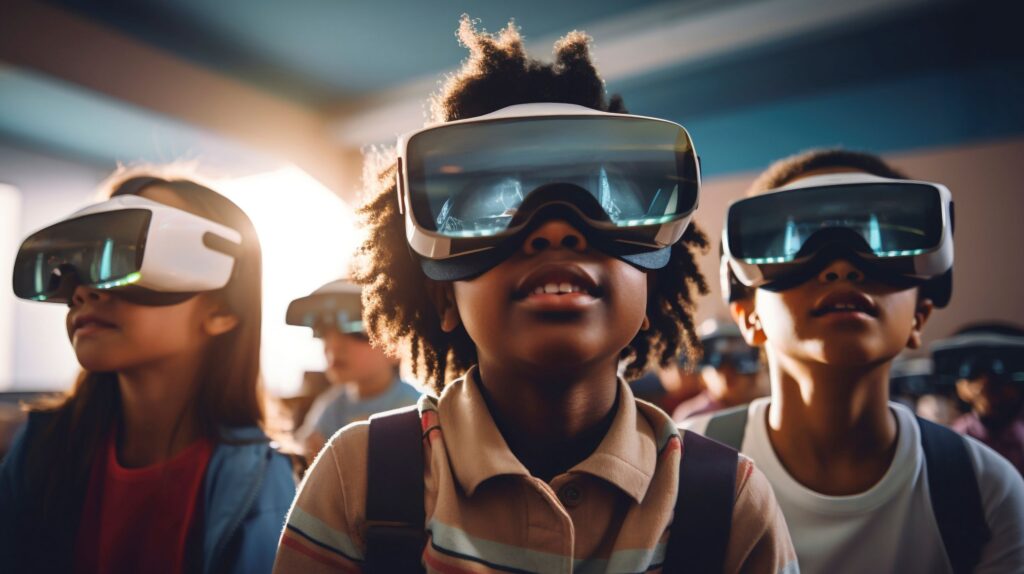
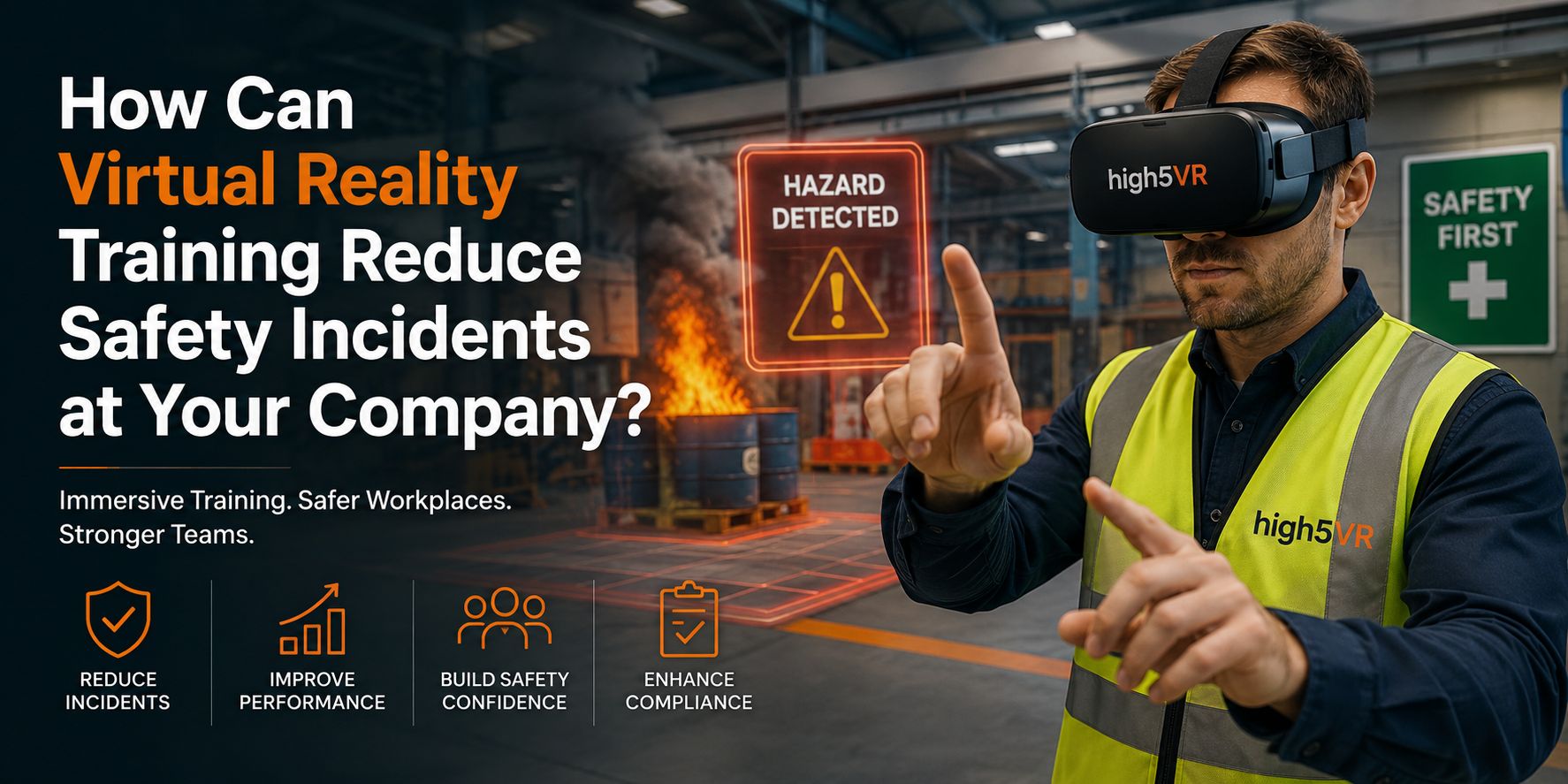
This is where Virtual Reality (VR) training is transforming workplace safety.
Instead of reading manuals or watching videos, employees experience realistic scenarios in a completely safe environment, allowing them to practise responding to dangerous situations before they happen in real life.
Why Traditional Safety Training Has Limitations
Most workplace safety training follows familiar methods:
- Classroom presentations
- PowerPoint slides
- Videos
- Paper manuals
- Toolbox talks
- Online learning modules
While these methods are useful, they often struggle to recreate the pressure and decision-making required during real emergencies.
Many employees simply cannot experience hazardous situations safely during training.
VR changes that completely.
What Is Virtual Reality Safety Training?
Virtual Reality training places employees inside a fully immersive digital environment using a VR headset.
Rather than reading about procedures, staff physically perform them.
They can:
- Identify hazards
- Operate machinery safely
- Respond to emergencies
- Practise evacuations
- Work at height
- Navigate confined spaces
- Handle dangerous materials
- Learn lockout/tagout procedures
- Improve situational awareness
Every mistake becomes a learning opportunity—without anyone being injured.
Why VR Training Reduces Workplace Safety Incidents
1. Staff Learn by Doing
People retain far more information when they actively participate rather than simply watch.
Immersive learning encourages employees to:
- Make decisions
- Solve problems
- Complete realistic tasks
- Experience consequences safely
The result is greater confidence and improved performance in real-world situations.
2. Employees Can Practise Dangerous Scenarios Safely
Many high-risk situations cannot realistically be recreated during traditional training.
VR allows businesses to simulate:
- Chemical spills
- Fires
- Explosions
- Working at height
- Electrical hazards
- Heavy machinery
- Vehicle movements
- Construction hazards
- Manufacturing incidents
- Emergency shutdown procedures
Employees gain practical experience without any actual danger.
3. Consistent Training Across Every Employee
Traditional training can vary depending on who delivers it.
With VR:
- Every employee receives identical training
- Every scenario is standardised
- Procedures remain consistent
- Compliance improves
- Knowledge gaps are reduced
This consistency helps create a stronger safety culture throughout the organisation.
4. Better Hazard Recognition
Many workplace incidents occur because hazards are overlooked.
VR teaches staff how to recognise risks before they become accidents.
Examples include:
- Trip hazards
- Unsafe lifting
- Incorrect PPE
- Equipment faults
- Poor housekeeping
- Unsafe behaviours
- Vehicle blind spots
- Environmental hazards
Employees become more aware of their surroundings, helping prevent incidents before they occur.
5. Increased Confidence During Emergencies
Emergencies create stress.
When people panic, mistakes happen.
VR allows staff to rehearse emergency situations repeatedly until procedures become second nature.
This includes:
- Fire evacuation
- Medical emergencies
- Equipment failures
- Hazardous leaks
- Site evacuations
- Incident reporting
Repeated exposure helps employees respond more calmly and effectively.
Real Business Benefits
Reducing safety incidents delivers benefits across the entire business.
These include:
- Fewer workplace injuries
- Reduced downtime
- Lower insurance claims
- Improved compliance
- Increased employee confidence
- Better staff engagement
- Faster onboarding
- Improved audit performance
- Reduced training costs over time
- Stronger health and safety culture
Investing in prevention is often far less expensive than dealing with the consequences of an accident.
Ideal Industries for VR Safety Training
Virtual Reality training is suitable for almost every industry, including:
- Construction
- Manufacturing
- Warehousing
- Logistics
- Engineering
- Utilities
- Healthcare
- Oil and Gas
- Aviation
- Retail
- Hospitality
- Education
- Emergency Services
- Local Authorities
Every workplace has hazards that employees can learn to recognise and manage through immersive training.
Can VR Training Be Customised?
Absolutely.
One of the biggest advantages of VR is that training can be tailored specifically to your business.
At High5VR, we create bespoke training experiences that replicate your workplace, equipment, procedures, and operational risks.
Examples include:
- Company-specific machinery
- Site layouts
- Health and safety policies
- Emergency procedures
- Equipment inspections
- Customer interactions
- Vehicle operations
- Maintenance procedures
Employees train in environments that mirror their real working conditions.
Why Choose High5VR?
At High5VR, we develop immersive Virtual Reality training solutions designed to improve learning, increase engagement, and help businesses reduce workplace safety incidents.
Our bespoke VR experiences can be used for:
- Health and Safety Training
- Fire Safety
- Working at Height
- Construction Safety
- Manufacturing Processes
- Employee Induction
- Machinery Operation
- Hazard Awareness
- Emergency Response
- Compliance Training
Whether you’re training ten employees or thousands across multiple locations, we can create scalable VR solutions that deliver measurable results.
Click here to book your FREE 15-minute consultation:
https://high5vr.com/contact/
Our team will discuss your training requirements and demonstrate how immersive Virtual Reality can help create a safer, more confident workforce.
Frequently Asked Questions
Does VR training replace traditional health and safety training?
No. VR complements existing training by providing realistic practical experience that reinforces classroom learning.
Is VR training suitable for small businesses?
Yes. Businesses of all sizes can benefit from VR training, especially where safety is a priority.
Can training be customised for our workplace?
Yes. We build bespoke VR experiences based on your procedures, equipment, and working environments.
How long does VR training take?
Training sessions typically range from 10 to 30 minutes, depending on the complexity of the scenario and learning objectives.
Is VR difficult to use?
Not at all. Modern VR headsets are intuitive, and most employees become comfortable using them within minutes.
Conclusion
Reducing workplace accidents isn’t simply about meeting compliance requirements—it’s about protecting your employees, improving confidence, and building a stronger safety culture.
Virtual Reality training provides an engaging, memorable, and highly effective way for employees to experience real-world situations without real-world risks.
By allowing staff to practise, make mistakes safely, and build confidence before facing genuine hazards, VR is helping organisations significantly improve workplace safety while reducing the likelihood of costly incidents.
If you’re ready to modernise your health and safety training, High5VR can help you create a bespoke immersive solution tailored specifically to your business.
Book your FREE 15-minute consultation today:
https://high5vr.com/contact/