Could You Experience the Same Moment Through Five Different People’s Eyes?

A concert rehearsal, a creative workshop or a fictional challenge contains several stories at once.
Could You Meet Your Future Self Inside a Virtual Version of Your Home?

A fictional future version of yourself appears in a virtual home and asks what you want to change.
Could Your Digital Twin Rehearse a Difficult Situation Before You Face It?

Imagine trying a presentation or a challenging customer conversation in a virtual setting first.
Could an AI Turn Your Day into a Playable Sci-Fi Adventure?
An ordinary kitchen becomes a spaceship galley and a familiar object becomes part of a fictional mission.
Could You Train a Robot by Playing a Video Game?

A player solving a virtual task could also produce examples useful to a robotics project.
Could Thousands of People Teach One Robot Different Skills?

A shared robotics project could invite many people to demonstrate variations of a task.
What makes a game work well in virtual reality?

A game that works on a flat screen may need substantial changes to feel natural in VR. The player is looking around from inside the scene and interacting through a headset. Good design starts with an enjoyable action that makes sense in that setting.
How can we show a VR experience in a normal promotional video?

A promotional video can help people understand a VR experience before they put on a headset. It should show both what the user sees and how the experience is used. A clear edit can explain the offer without implying that a flat video reproduces the feeling of being inside VR.
Can game mechanics make workplace training more engaging?

Game mechanics can give a training activity a clear challenge, visible progress or a reason to try again. They are useful when they support the skill being taught. Adding points to an exercise does not by itself make the learning effective.
How can dealerships keep virtual vehicle specifications accurate when models change?

A virtual showroom needs a content update process when vehicle specifications change. Treat the model, configuration options and explanatory information as maintained sales assets. A visually attractive demonstration can become misleading if an old trim is presented as the current one.
Which VR headset is best for our business training project?

The best VR headset for a business project is the one that supports the required application and can be used reliably in the planned sessions. A consumer popularity ranking does not answer questions about installation, facilitation, cleaning or support.
What should a business plan before commissioning a VR game?

Before commissioning a VR game, a business should define its audience, intended use and practical delivery conditions. These decisions shape the design as much as the creative idea. A clear brief helps distinguish essential features from possible future additions.
What is the difference between XR, AR, VR and mixed reality?

XR is an umbrella term used for extended reality experiences, including virtual reality and augmented reality. The names describe related approaches, but the practical question is what your audience needs to see and do. High5VR can help turn that requirement into a project brief rather than choose a format from its name alone.
Can a custom VR game help a business engage customers?
A custom VR game can give visitors an interactive way to explore a brand, product or idea. It needs a clear purpose beyond attracting attention. Decide what you want the customer to understand or do after the experience before choosing the game mechanics.
How do we prepare a 360° film for different viewing platforms?

A 360-degree film may need different exports for a headset, a video platform and a normal promotional screen. Agree the intended destinations before finishing the edit. One file is not necessarily suitable for every viewing route.
How do game engines turn a workplace into a realistic VR training environment?
A game engine can bring together a workplace’s digital assets, sound and interactions to create an explorable training environment. The goal is not simply to copy every visible detail. The environment needs to communicate the information required for the exercise while running reliably on the target hardware.
When does a training project need a 3D model rather than filmed footage?
The choice between a 3D model and filmed footage depends on what the learner needs to do. Filming can capture a real setting and a person’s performance. A model can support interactions or viewpoints that would be difficult to record. Some projects benefit from a combination.
Can VR help employees recognise when they need to ask for assistance?
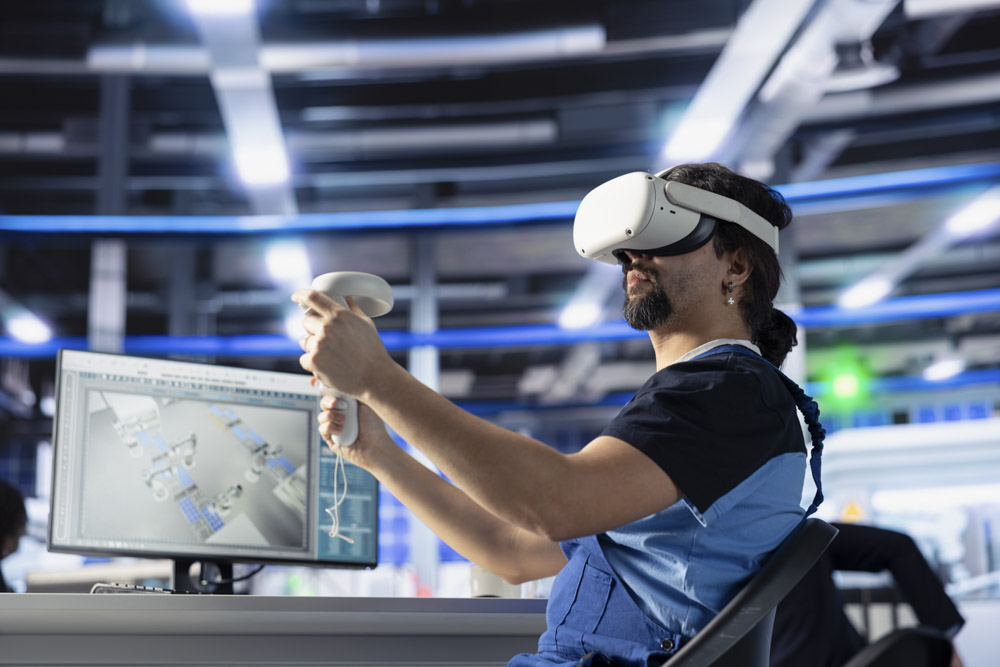
Knowing when to ask for help is a useful workplace skill. A VR exercise can present an uncertain situation and let employees practise recognising the limits of their information or authority. The lesson should make appropriate escalation a positive decision.
What Happens When Your VR Training Needs Updating?

VR training can need changes when equipment, procedures or the organisation itself changes. Planning for updates at the start of a project makes it easier to keep the experience useful rather than treating the first release as a permanent finished object.
Can an Architect Walk a Client Through a Proposed Property in VR?
An architect could use a commissioned VR walkthrough to enter a proposed property with a client and guide them through the design. Instead of relying only on drawings, the conversation can take place around a shared view of rooms, circulation and the relationship between spaces.